There are many things to consider when embarking on the process of appointing a PR agency to handle your affairs: local or national, specialist or cross-market, large or small and so on.
To help you get a handle on things, here are a few points to consider…
To appoint, or not to appoint a PR agency?
A fresh pair eyes equals a new perspective
You and your colleagues may have been mulling over the wording of that press release, or how best to pitch to a journalist for a while, without being able to give the pitch the edge it needs. A PR agency will be able to look at your business with fresh eyes, a new perspective and a greater level of objectivity. Any PR agency worth their salt, will be adept at delivering stories that are likely to generate interest and will spot those opportunities which you may have missed.
PR’s have invaluable media connections
If you are looking to generate publicity quickly, you will need the expertise of an agency who has a network of connections in the media. Whilst building relationships with journalists is possible, it does take time. A PR agency will come with those relationships already in place; each agency to varying degrees.
Valuable writing skills
Public Relations professionals are good writers - it is a core part of their job requirement. Their talent in the art of writing, and subsequent way with words, can make anything (i.e. you, your business or your product) sound like the best thing the world has ever seen. Whilst a talent for the written word may not be one of your strongest skill-sets, it is an imperative that any media release being pitched to the media is well written.
Time
The exercise of PR is extremely time consuming and one that cannot be completed effectively if you’re not fully committed to the task. Employing an agency will mean a set proportion of time is attributed to your account to achieve the goals you have set in place, meaning that your PR affairs are never neglected.
Cross-Market Agency Vs. Specialist Agency
Jack of all trades, master of none
A cross-market PR agency may be a master of integration and possess just enough knowledge of many market sectors to be able to bring their disciplines together in a practical manner. However, a specialist PR agency is an expert in their field and often has extensive knowledge, ability and proven experience in that sector.
Greater knowledge of the sector
Every industry has its niche, none more so than that of the family/kids market sector. Specialist PR agencies will have the edge here. They should be familiar with industry movements, your competitors and be the first to know of great opportunities to help propel your business forward.
Communicating effectively with the audience
Understanding the audience you’re targeting is equally important, especially with the social networks proving so prolific in the spreading of messages.
Contacts
A specialist PR will have built-up a strong and reliable source of sector specific contacts. They’ll know who the 'Movers & Shakers' are and how to pitch your brand/business/products effectively. This list of contacts may prove invaluable when exposing opportunities for your business.
Investment
A specialist PR is likely to invest heavily in the very best PR resources specifically for their sector.
Local or National Agency?
This really depends upon what you’re hoping to achieve. A PR agency with a local focus will be able to deliver strong local PR opportunities. If however, you’re looking for a campaign that delivers nationally, it goes without saying a PR agency with a national focus will be much more beneficial in helping achieve your goal. Nationally focused agencies will be familiar with working alongside national media outlets as well as the regional titles and whilst their ‘local’ connections may not be quite as strong, with the correct contacts and pitch they shouldn’t struggle to deliver.
Small Vs. Large Agency?
Smaller working teams
Small teams can often benefit a business or brand in terms of, (a) chemistry with the client, (b) enthusiasm for the brand and products, and (c) level of priority – you’re much more likely to feel like you are a key priority with a small team.
Personal approach
Typically, larger PR agencies will leave the pitch process to founding/executive members of the team. Once they've won your account, it'll be handed over to a lesser experienced ‘Account Executive/Manager’. In contrast, smaller PR agencies tend to provide a much more hands-on and personal approach to your PR affairs.
Lower overheads
Smaller agencies are more likely to have lower overheads and this will impact the fees they charge to their clients.
If your business targets the family market (children/parents/families) and you are considering taking on the services of a PR agency, contact Lisa at Lil' Spin for a free consultation. t. 0845 257 1479 e. pr@lilspin.co.uk

Publicity services for businesses and brands targeting the family market
Digit-All Change
Following the news that Junior Magazine (part of Immediate Media Co’s stable of parenting titles) has closed its print publication, opting for a purely digital presence only, I thought it apt to revisit the current trends in digital media usage.
We live in a world that is increasingly mobile in digital arenas (no pun intended!): we shop online, socialise online, game online, watch TV online, etc. It’s inevitable that we are going to want to consume our media online too.
In my post ‘The PR Mix’, I wrote how mothers in particular are amongst the main consumers of digital media. As a mother myself I can relate to this; much of my news and information is sourced online – it’s convenient, often free, up-to-the-minute, and you can search multiple topics easily.
According to a recent news report by The Guardian, a global analysis of ‘How Consumers Spend Their Media Time’, a study by GlobalWebIndex cited by Warc, finds that people around the world now spend more time with digital than traditional media.
The study, based on responses from more than 32,000 internet users in 31 countries found that 5.6 hours or 57% of daily media consumption, was dedicated to digital, including social media and mobile internet usage.
Interestingly, it would seem that mobile technology has also had a significant influence over digital media consumption. A report, covering 14 countries, released by InMobi demonstrates that growth of mobile media is constantly reshaping media consumption habits:
- Globally mobile ranks first in media consumption with 1.8 hours a day, outpacing TV (1.5 hours), PCs (1.6 hours) and any other channel.
- 50% of the average global mobile web users now use mobile as either their primary or exclusive means of going online.
It seems that the film industry too has been quick to play their digital media card as The Daily Telegraph journalist Mick Brown pointed out in a recent interview with The Guardian, stating that he has witnessed a decline in the value that the film industry place upon ‘traditional’ media and are instead investing more of their PR campaign into digital and social media.
Many media outlets have now adopted a ‘best of both’ approach - broadcasting news both online and in print. Some have (controversially) begun to capitalise on this new digital media movement, including media mogul Rupert Murdoch, who has already introduced a Paywall system to The Times and is reported to be doing the same with The Sun later this year.
Traditional Vs. Digital
With the rise of citizenship journalism, it is important to consider whether the digital media is a credible and trustworthy resource. As I touched on in my earlier post ‘PR Misconceptions’, when you receive a piece of editorial about your brand/product, it generates a level of credibility with the reader. The higher they rate the media, the higher the perceived credibility of the brand/product. For example, if you read about a ‘flying pig’ online, you’d probably be far more cynical about the story than if you’d read it in, say, The Daily Telegraph national newspaper.
Traditional media outlets still have a big advantage over their digital media rivals - the value of the tangible, printed hard-copy still outranks that of digital media, even if only in perception alone. Whilst the readership figures of traditional media might be half that of a digital counterpart, their readers are invested into that media especially if they’ve paid to receive copies; generating a more loyal readership, thus adding credibility to their editorial content.
On the flip side, digital exposure can work on multiple levels, not only increasing awareness and exposure for the brand but also with aiding search-engine visibility and organic results. Digital stories also have longevity and can remain on servers for far longer than a print copy might stay on a desk or coffee table.
What can we deduce from this?
I think it’s safe to say that it’s no mystery that digital media is the way of the future. For all those sceptics and old-school PRs that believed it was a fad, here’s looking at you! I have always believed it is the responsibility of any publicist worth their salt to communicate messages across multiple platforms; both digital and traditional. This research, while compelling, doesn’t mean it’s time to ditch ‘traditional’ and go digital. What it does mean is that it’s time to embrace the digital media age - where once it might have been a nice boost to the ego to see your name in ‘print’, it is no longer wise to dismiss the value of digital media coverage garnered.
We live in a world that is increasingly mobile in digital arenas (no pun intended!): we shop online, socialise online, game online, watch TV online, etc. It’s inevitable that we are going to want to consume our media online too.
In my post ‘The PR Mix’, I wrote how mothers in particular are amongst the main consumers of digital media. As a mother myself I can relate to this; much of my news and information is sourced online – it’s convenient, often free, up-to-the-minute, and you can search multiple topics easily.
According to a recent news report by The Guardian, a global analysis of ‘How Consumers Spend Their Media Time’, a study by GlobalWebIndex cited by Warc, finds that people around the world now spend more time with digital than traditional media.
The study, based on responses from more than 32,000 internet users in 31 countries found that 5.6 hours or 57% of daily media consumption, was dedicated to digital, including social media and mobile internet usage.
Interestingly, it would seem that mobile technology has also had a significant influence over digital media consumption. A report, covering 14 countries, released by InMobi demonstrates that growth of mobile media is constantly reshaping media consumption habits:
- Globally mobile ranks first in media consumption with 1.8 hours a day, outpacing TV (1.5 hours), PCs (1.6 hours) and any other channel.
- 50% of the average global mobile web users now use mobile as either their primary or exclusive means of going online.
It seems that the film industry too has been quick to play their digital media card as The Daily Telegraph journalist Mick Brown pointed out in a recent interview with The Guardian, stating that he has witnessed a decline in the value that the film industry place upon ‘traditional’ media and are instead investing more of their PR campaign into digital and social media.
Many media outlets have now adopted a ‘best of both’ approach - broadcasting news both online and in print. Some have (controversially) begun to capitalise on this new digital media movement, including media mogul Rupert Murdoch, who has already introduced a Paywall system to The Times and is reported to be doing the same with The Sun later this year.
Traditional Vs. Digital
With the rise of citizenship journalism, it is important to consider whether the digital media is a credible and trustworthy resource. As I touched on in my earlier post ‘PR Misconceptions’, when you receive a piece of editorial about your brand/product, it generates a level of credibility with the reader. The higher they rate the media, the higher the perceived credibility of the brand/product. For example, if you read about a ‘flying pig’ online, you’d probably be far more cynical about the story than if you’d read it in, say, The Daily Telegraph national newspaper.
Traditional media outlets still have a big advantage over their digital media rivals - the value of the tangible, printed hard-copy still outranks that of digital media, even if only in perception alone. Whilst the readership figures of traditional media might be half that of a digital counterpart, their readers are invested into that media especially if they’ve paid to receive copies; generating a more loyal readership, thus adding credibility to their editorial content.
On the flip side, digital exposure can work on multiple levels, not only increasing awareness and exposure for the brand but also with aiding search-engine visibility and organic results. Digital stories also have longevity and can remain on servers for far longer than a print copy might stay on a desk or coffee table.
What can we deduce from this?
I think it’s safe to say that it’s no mystery that digital media is the way of the future. For all those sceptics and old-school PRs that believed it was a fad, here’s looking at you! I have always believed it is the responsibility of any publicist worth their salt to communicate messages across multiple platforms; both digital and traditional. This research, while compelling, doesn’t mean it’s time to ditch ‘traditional’ and go digital. What it does mean is that it’s time to embrace the digital media age - where once it might have been a nice boost to the ego to see your name in ‘print’, it is no longer wise to dismiss the value of digital media coverage garnered.

The PR Mix
Public Relations (PR) has long been considered a powerful and cost-effective way to promote a business. It allows a customer to feel they have made an informed and educated decision based on research or valued opinion, rather than simply being ‘sold to’ through traditional advertising.
Not so very long ago, certainly within my lifetime (and I’m no dinosaur!), managing the flow of information between an organisation and the individual was somewhat more confined.
Over the course of the past decade, the PR industry has witnessed rapid developments. Where once, the concentration of the PR effort fell on traditional print and broadcast media, the digital age has seen to the development of an entirely new arena of mediums which form, what us practitioners term as, The PR Mix. Not least so in the family/parent marketplace, where research has identified a new consumer movement that has seen the widespread adoption of these new mediums.
The PR Mix is, in essence, a combined use of the media at your disposal i.e. print, social media, digital media, and broadcast media. A good publicist will attempt to utilise as many of these media outlets as possible to successfully communicate the message they’re trying to convey. This utilisation of The PR Mix is particularly important as 94% of people view multiple media before making a purchasing decision (Demand Gen 2012) – meaning your message must be seen in more than one place before a person is likely to make any commitment. The more widespread your message, the more likelihood there is of achieving sales.
The New Kids of The PR Mix:
The newest additions to The PR Mix are all, unsurprisingly, online. If utilised correctly, not only can they begin to spread-the-word ‘virally’, they can also help aid Search Engine Optimisation (SEO).
Social Media /
79% of mums with children under the age of 18 are active on social media*.
For mums like me, social media can serve many purposes: a source of information and peer recommendations, and a way to keep in touch with family, friends, etc.
There are of course numerous social media channels which I’ve detailed in earlier posts, but of these Facebook and Twitter continue to be the two most popular destinations for many mums. Brands have been quick to recognise this and most will have their own identities on these sites.
However, maintaining social forums is a real commitment for a brand. Fans expect a quick and helpful response to questions and comments they post, as well as to be engaged with useful and entertaining content.
Digital Media /
84% of mums use the internet (11% more than the overall population)*.
Raising a family brings many challenges and a constant need for information, inspiration, support and new things to buy. The modern, time-poor, parent heads online to fulfil all of these needs utilising websites such as AOL’s Parentdish, BabyExpert, MadeforMums, iVillage, MummyPages, etc.
Content can be informative, entertaining, commercial, or simply reinforcing brand messaging, and can take the form of news, features, images, video or games and apps.
Blogger Outreach /
The parent blogging community has grown rapidly in recent times, with over 6,000 parent blogs in the UK alone.
Bloggers write about a wide range of topics close to their hearts and based on their experiences. Many are open to mutually beneficial relationships with brands that are both relevant and appropriate.
To find out more about how your business can successfully embrace the PR Mix, why not get in touch? We look forward to hearing from you soon.
* Data compiled by eMarketer
Not so very long ago, certainly within my lifetime (and I’m no dinosaur!), managing the flow of information between an organisation and the individual was somewhat more confined.
Over the course of the past decade, the PR industry has witnessed rapid developments. Where once, the concentration of the PR effort fell on traditional print and broadcast media, the digital age has seen to the development of an entirely new arena of mediums which form, what us practitioners term as, The PR Mix. Not least so in the family/parent marketplace, where research has identified a new consumer movement that has seen the widespread adoption of these new mediums.
The PR Mix is, in essence, a combined use of the media at your disposal i.e. print, social media, digital media, and broadcast media. A good publicist will attempt to utilise as many of these media outlets as possible to successfully communicate the message they’re trying to convey. This utilisation of The PR Mix is particularly important as 94% of people view multiple media before making a purchasing decision (Demand Gen 2012) – meaning your message must be seen in more than one place before a person is likely to make any commitment. The more widespread your message, the more likelihood there is of achieving sales.
The New Kids of The PR Mix:
The newest additions to The PR Mix are all, unsurprisingly, online. If utilised correctly, not only can they begin to spread-the-word ‘virally’, they can also help aid Search Engine Optimisation (SEO).
Social Media /
79% of mums with children under the age of 18 are active on social media*.
For mums like me, social media can serve many purposes: a source of information and peer recommendations, and a way to keep in touch with family, friends, etc.
There are of course numerous social media channels which I’ve detailed in earlier posts, but of these Facebook and Twitter continue to be the two most popular destinations for many mums. Brands have been quick to recognise this and most will have their own identities on these sites.
However, maintaining social forums is a real commitment for a brand. Fans expect a quick and helpful response to questions and comments they post, as well as to be engaged with useful and entertaining content.
Digital Media /
84% of mums use the internet (11% more than the overall population)*.
Raising a family brings many challenges and a constant need for information, inspiration, support and new things to buy. The modern, time-poor, parent heads online to fulfil all of these needs utilising websites such as AOL’s Parentdish, BabyExpert, MadeforMums, iVillage, MummyPages, etc.
Content can be informative, entertaining, commercial, or simply reinforcing brand messaging, and can take the form of news, features, images, video or games and apps.
Blogger Outreach /
The parent blogging community has grown rapidly in recent times, with over 6,000 parent blogs in the UK alone.
Bloggers write about a wide range of topics close to their hearts and based on their experiences. Many are open to mutually beneficial relationships with brands that are both relevant and appropriate.
To find out more about how your business can successfully embrace the PR Mix, why not get in touch? We look forward to hearing from you soon.
* Data compiled by eMarketer
Un-blurring the Lines between Marketing, PR and Advertising
There’s often much confusion generated by the terms ‘marketing’, ‘PR’ and ‘advertising’. To some, the three represent the same thing but to practitioners, it’s a very different story.
There is, of course, cross-over between the three disciplines. Effective use of all three will invariably do wonders for stengthening the position of your business/brand in the marketplace.
Industry professional bodies explain the various fields of expertise as follows…
Marketing: Marketing is the management process responsible for identifying, anticipating and satisfying customer requirements profitably – Chartered Institute of Marketing
Public Relations: Public relations is about reputation - the result of what you do, what you say and what others say about you – Chartered Institute of Public Relations
Advertising: Creates the most relevant and distinctive way of communicating in creative & media terms – Institute of Practitioners in Advertising
The Proud Parent Analogy
To help explain further, I have come up with a very simplistic analogy, in keeping with the ‘Family’ theme, which I’ve called ‘The Proud Parent Analogy’…
Marketing:
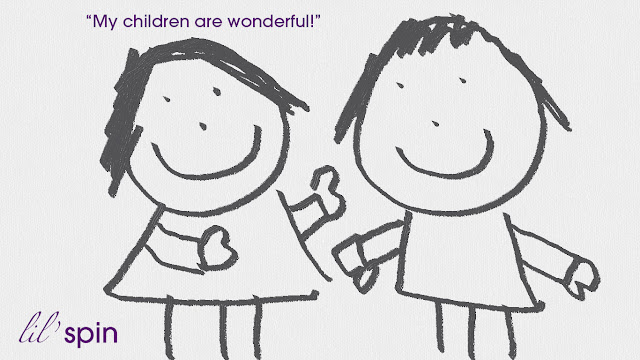.jpg)
.jpg)
Advertising:

There is, of course, cross-over between the three disciplines. Effective use of all three will invariably do wonders for stengthening the position of your business/brand in the marketplace.
Industry professional bodies explain the various fields of expertise as follows…
Marketing: Marketing is the management process responsible for identifying, anticipating and satisfying customer requirements profitably – Chartered Institute of Marketing
Public Relations: Public relations is about reputation - the result of what you do, what you say and what others say about you – Chartered Institute of Public Relations
Advertising: Creates the most relevant and distinctive way of communicating in creative & media terms – Institute of Practitioners in Advertising
The Proud Parent Analogy
To help explain further, I have come up with a very simplistic analogy, in keeping with the ‘Family’ theme, which I’ve called ‘The Proud Parent Analogy’…
Marketing:
.jpg)
Public Relations:
.jpg)

PR Misconceptions
It’s unsurprising that, having been heavily involved in the
PR ‘game’ for more than a decade, I’ve come across my fair share of
misconceptions about PR. On occasion some take me a little by surprise,
others make me despair!
PR is not based on 'luck'! Chance favours the prepared mind, and timing can be controlled. In public relations, marketing, promotion,
and sales, timing is key: You succeed largely because you reach
your media contact, target market, or prospect at just the right time, with the right story.
First-things-first, let’s iron-out and reiterate why PR is
by far one of the most effective weapons your business can deploy to generate
awareness and ‘buzz’ about your brand/product, especially if budgets are
limited!
1) PR can prove to be an economical way to reach a mass
audience, stimulating awareness of - and demand for - your
brand/products/services.
2) PR can aid the development of a stronger and more controlled image; since PR usually involves the media outlet covering a story, these ‘stories’ can long outlive the immediate impact of advertising for example.
3) PR can help create the perception that a company is active and on the move.
4) PR, or more specifically editorial coverage of your PR message, has up to 7x the credibility of advertising; editorial is conveyed and controlled by a third-party, in contrast to advertising - which is paid for and controlled by the company it’s for - and is therefore considered more ‘truthful’.
5) It provides an advantage over competitors who do not use PR effectively.
6) PR can increase search-engine visibility and organic results.
2) PR can aid the development of a stronger and more controlled image; since PR usually involves the media outlet covering a story, these ‘stories’ can long outlive the immediate impact of advertising for example.
3) PR can help create the perception that a company is active and on the move.
4) PR, or more specifically editorial coverage of your PR message, has up to 7x the credibility of advertising; editorial is conveyed and controlled by a third-party, in contrast to advertising - which is paid for and controlled by the company it’s for - and is therefore considered more ‘truthful’.
5) It provides an advantage over competitors who do not use PR effectively.
6) PR can increase search-engine visibility and organic results.
Now, let’s tackle some of the misconceptions…
PR is not something that can be measured and translated into
direct sales, nor should any one particular media be discounted purely on the
basis it hasn’t generated a direct result (such as a sale or enquiry). PR
is a long-term commitment and its primary purpose is to maintain image and generate awareness.
When you receive a piece of editorial about your
brand/product, it generates a level of credibility with the
reader. The higher they rate the media, the higher the perceived
credibility of the brand/product. For example, if you read about a
‘flying pig’ in a copy of the free local newspaper, you’d probably be far more
cynical about the story than if you’d read it in, say, The Times national
newspaper.
Studies have proven that it will take a person on average,
three times to see/hear a repetitive message before their conscious psyche
recognises it and they subsequently begin to act on that message – again, this will
also depend upon their own perception of the credibility of the media.
PR is an investment that takes time. A media release doesn't generally get published the day after it's written. Lots of time is spent writing material, developing media lists, and selling-in, prior to a 'story' hitting the headlines.
Facebook Timeline…
Love it or hate it, as of 30 March
’12, all Facebook Pages will
automatically take-on the new Timeline format. There’s two ways to approach it: live with
it or, live without! For many
businesses, Facebook has become an important marketing resource so, living
without simply isn’t an option.
I will walk through, step-by-step,
how to prepare your page for the new changes, and how to ensure your business
benefits.
Profile Picture:
About:
Apps:


Pinning:


I decided to adopt the Facebook
Timeline, and get to grips with its workings, to see how it can be of benefit to
businesses. At first, I was a little
hesitant but I’m not one to be beaten by a challenge! Whilst familiarising yourself with the new layout
can, at times, prove a little frustrating, I do believe that this new format
has a lot to offer businesses. For example: you’re provided with a free, visually impactful banner to display across the top of your page, you can alter your App
images to provide a more cohesive design to your page, visitors will be more
compelled to engage and interact as their friends’ activity is now featured at
the top, you can "tell a story" about your business utilising the milestones
feature, and you can ensure the important status updates remain in a consistent top spot.
In my own humble opinion, the interface is far
more user-friendly, and best of all, you don’t need to be a computer whizz to
create a page that looks professional.
Cover Photo:
The new Timeline
displays a cover photo (or banner) across the top of the page. Cover photos are relatively easy to create
(depending on your design skills). They
remain static and provide a strong focal point for your business fan page.
- A cover photo should measure 851 x 315 pixels. Facebook automatically crops anything that is larger, and you are provided with the option of repositioning images as required.
- Ensure that you use a high-quality image, to avoid a pixelated appearance.
- Be creative and experiment! Use imagery that represents your page; your company logo, products or, an image that tells a story.
- Facebook has included strict guidelines upon how businesses may use the new cover photo: a) No calls-to-action or arrows directing users to take an action i.e. "Get it now", "Tell your friends", etc, b) No contact information, such as URLs, phone numbers and addresses, c) No price or purchase information i.e. 40% off, d) No reference to user interface elements i.e. "Like" or "Share"
- If you’d like to add context to your cover photo without violating the guidelines, use the caption to add calls-to-action and relevant link to whatever is in the picture. For example, if your cover photo is of your products, add a link to your website in the caption, urging users to visit the link to find out more. You may also want to consider a Quick Response (QR) code for other relevant info. Strictly speaking, this doesn’t currently infringe Facebook guidelines on the use of the cover photo.
 |
| For my personal page, I experimented to create an individual cover photo |
Profile Picture:
Unlike the original layout, where
you could adopt an elongated profile picture, new profile pictures will only display
as a square.
- Profile images are 180 x 180 pixels
- Your full profile image will also act as your page’s avatar and show up next to your updates in the news feed and when people run random searches for your page. Unlike current page designs, this will not be a cropped section of the profile picture. For these reasons, it's worth considering your company logo as your permanent profile pic.
- To alter your profile picture, hover over the image and "Edit Profile Picture" will appear
About:
This will pull from the
current information in your page’s info tab. You can still place a web link
here. Be sure to alter this if it’s out
dated!
Apps:
You can display
four items in the section below your cover photo, but your photos will always
appear first. You may choose an
additional three Apps to appear here. You can include upto 12 apps in total on your page, which are accessible using
the drop-down menu arrow to the far right of the screen. Clicking on these
thumbnails will take users to the corresponding app, so make sure these are the
things you want to drive your page’s visitors to. Unlike the previous format, it is easy to
alter the image that displays for your App.
To alter the appearance of your Apps, hover over the applicable App
until the little pencil mark displays, from here you can alter the positioning,
you can remove it from your ‘favourites' and, by going to "Edit Settings", you
can rename it and alter the image. For
App images, ensure they are no more than 74 x 74 pixels.
 | |
|
Friend Activity:
People will see
any interaction their friends have had with a page (even if they haven’t ‘Liked’
the page themselves).
Managing Your New Page /
In addition to the front-end
changes, the new format includes a whole host of management features, some of
which you will already be familiar with.
Admin Panel:
This dashboard
allows you to quickly navigate and view your page’s "Insights", respond to
messages and view notifications about pages likes and activity on your
page. Included within the admin dashboard,
are drop-down menus to the top right where you can:
a) Manage – this option
allows you to edit the page and view the activity log (month-by-month).
b) Edit –
as with the former layout, the edit feature is one with which you are no doubt
already familiar, however it provides you with the option to "unpublish" your
page whilst testing out the Timeline.
c) Activity Log – Filter through the type
of activity you view i.e. Info Updates, Photos, Video, Comments, etc. The simplified menu makes it a lot easier to
go back and find older posts, rather than scrolling endlessly through your entire
Timeline.
d) Build Audience – As with the older version, you can invite your
contacts and friends to "Like" your page, share or create ad’s.
e) Messages –
You now have the option to allow your page’s community to directly message the
page admins. You will be able to access
and answer these messages from the admin dashboard. To activate fan messages, go to "Manage
Permissions" and select "Show Message Button".
People can send messages to your page by clicking on the messages button
between your cover photo and apps.
Milestones:
Add significant
dates/events using your status menu.
Select a year, event, story, photos & videos. Use of the Milestones facility might include:


- The year the company was founded
- New office premises
- New team member
- Product releases
- Awards
- Partnerships
Pinning:
This is a great new
feature, as it will ensure that important updates never risk going unseen. You can choose one story a week to "pin" to
the top of your page and these will remin in-situ for seven days. Pinned stories are distinguished by a small
orange flag which appears in the top right corner of your "pinned" story. Pinning
stories is very simple; click on the pencil icon next to the status
update. From there, select "Pin to Top"
(you can also reverse the process and "unpin" if you decide you no longer wish
to feature it. Uses of the "Pinning" feature might include:
- Time-sensitive discounts & promotions
- Recent blog post
- New product images
- Videos
- Article or current event that’s relevant to your industry
- New awards

Highlights:
Clicking the star symbol
on a status update will display the post in a wide format, across the entire
Timeline. It’s a great way to ensure
that photos take centre-stage in your Timeline.
Unclicking the star will reverse the process.

Change Date:
This new feature
enables you to alter the date an album was created so that they better reflect
your company’s history
Reposition Photo:
A handy
feature with the Timeline is the ability to reposition photos simply by
dragging them to show a better section of the image. With this new feature, you can revisit and ‘fix’
any older photos that may have been cropped badly before switching to Timeline.
Should you require advice or assistance with setting-up your new Timeline layout, do get in touch. Until 30 March '12, Lil' Spin is offering a design service to create a cohesive, visually impactful page for your company, for just £100+VAT (includes: cover image, profile picture and apps). Email: lisa@spinpublicity.co.uk for details.
Everyone’s talking about 'Pinterest'…
Move over Facebook, Twitter, Google+, et al, another social media is
stepping into the game, and providing a valuable marketing tool to businesses.
So what is Pinterest?
Pinterest is essentially a virtual pin-board where you can collect and
share images. It first launched in 2010 and has experienced rapid growth
in more recent months. In contrast to its social media counterparts such
as, YouTube, Google+ and Linkedin, Pinterest is also proving a valuable aid in
drawing traffic to external websites and blogs.
How can it benefit your business?
Unlike Facebook and Twitter, where you attract followers, the
Pinterest platform is completely visual and focuses on collective interests
i.e. Architecture, Cars, DIY, Film, Gardening, Beauty, Outdoors, etc.
Users are eager to find and share amongst the entire population, rather than
purely between friends. It’s a place to make discoveries which can then
be organised onto boards. For example, on a personal page, you may
choose to categorise your finds and ‘repin’ them onto boards which you have
named: "For my daughter", "For my wife", "Things I Like", and so on. A pin is an image you have chosen to share, paired with a short caption, which
can all then be linked back to the original source, such as your website or blog
in order to drive traffic; great for Search Engine Optimisation. It’s a
relatively simple but very effective concept to follow. In a similar way
that a comment or link may go viral on the more established social networks, so
too can Pinterest pins, and it’s a perfect
forum to study trends amongst the population.
Like any form of social media, it’s a two-way conversation, all about
building connections and forging stronger bonds with your audience.
For businesses with products targeting the family market, the advantages
are obvious: create a board linked to the appropriate category i.e. Kids, pin
photos of your products, include a brief description and price (if desired),
ensure that there’s a link where users can follow it to your website and/or
blog and let the Pinterest population do the rest; view, like, share, comment
and re-pin!
Here are some top tips on using Pinterest:
- First, get invited by a friend, or simply request an invite online
- If you choose to operate a purely business associated page, it may be wise to link it with your business Twitter account, as Facebook tends to link it to your personal account.
- Invest in good quality photographs and images (lifestyle images can be more effective than basic product images).
- Back-link each pin to your source website. People will click once on the picture to see the full pin, and can click a second time to be directed outside of Pinterest to your website.
- Include a price in the description to automatically add an overlaying banner on the picture featuring the price.
- Pin alternate uses for your product. For example, if you make children’s clothing, pin images onto a board that form a "From start to finish" guide, for one or more of your best-selling products.
- Add the “Pin It” social media button to your website to allow for and encourage pinning
- Connect your physical and online presence. Try running a promotion that drives customers to your Pinterest board
- Try to avoid being too self-promotional. It’s easy to spot a self-serving board and it’s also an official Pin Etiquette rule. Be relevant to your target market and post other content they would find interesting to keep people coming back for more. Pin your own products, Show uses for your products, as well as inspiration for the lifestyle they advocate.
- Follow big names – this is proven on Twitter. If they follow you back, this boosts your own visibility to others.
- Tag your pin using key phrases that define the brand and inspire, since Pinterest is all about inspiration. Get in the mind of your ideal consumer and think about what search terms they’d use.
- Use other social media platforms (that have the advantage of a more established user base) to direct people towards Pinterest. A status update like this one will inform your customers you’re active on Pinterest: “Follow our pins for new products and great ideas!"
If you feel swamped by social media and don't know which way to turn, or simply need to off-load your social media effort, please get in touch with us... we're on hand to assist!
Subscribe to:
Posts (Atom)